Project Title
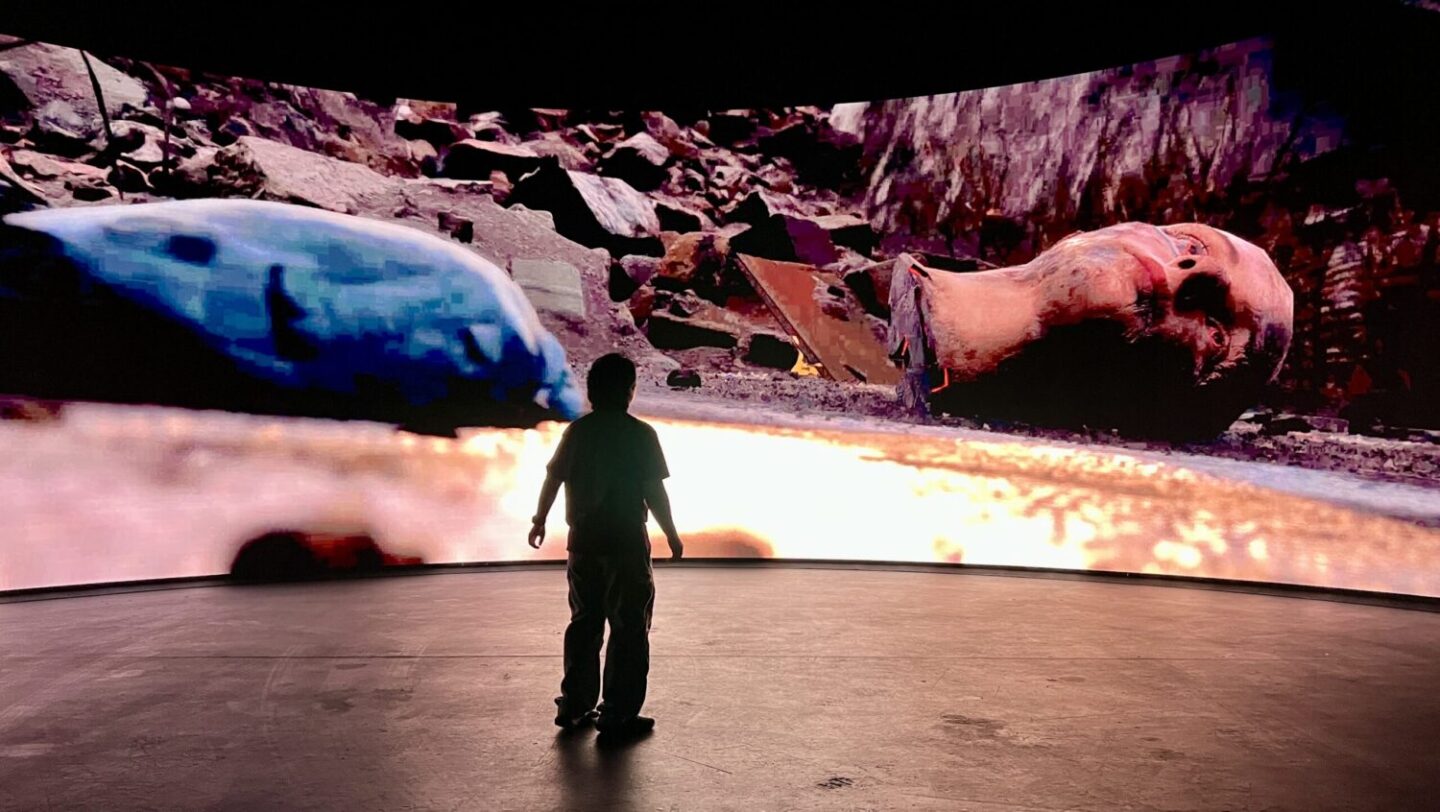
Anamnesis; Interactive Film
Project Timeline
January 2025 April 2025
Team members
Felix Choi
Samantha Lai
Selena Guan
Jose Mireles Macario
Grace Rodriguez-Gomez
Lucy He
NOTE
This page mainly focuses on the UX and Interaction Design side of the project. If you are interested in learning more about the overall project process, please check out this link.
Project Detail
🎬 “Anamnesis” is not just another short film. It is a new kind of interactive experience that breaks away from the game-like feel of most existing interactive films, which often disconnect viewers from the cinematic flow. Our team, Interactive Story Labs, set out to change that.
✨ We introduced a new interaction model: A Zero UI interactive film, driven by unconscious viewer engagement. The film subtly branches based on how viewers engage with it—no buttons, pop-ups, or pauses. Interactivity is built into the cinematography, composition, foreshadowing, and sound. Each person ends up with a slightly different version of the story.
🎥 On the surface, it looks like a traditional film. But behind the scenes, it required us to completely rethink the filmmaking process to make this invisible interactivity possible.
My Role
Our team, Interactive Story Labs, included six members with diverse expertise; filmmaking, cinematography, 3D art, programming, and my role in UX and interaction design. With innovation at the core, we broke away from traditional role boundaries and collaborated closely, often reshaping each other’s work from different perspectives.
As the UX and Interaction Designer, I contributed not only to interaction and user experience design but also to script writing, cinematography, filmmaking, and even a bit of programming along the way.
Trailer
Anamnesis (2025)
Anamnesis Log Line
A disfigured android lies in the middle of a junkyard, still sentient but with no memory of its past. In the twilight moments before its last bit of battery runs out, it begins to piece together its former life as a replica of a real human.
Research
Interactive Movie Today…
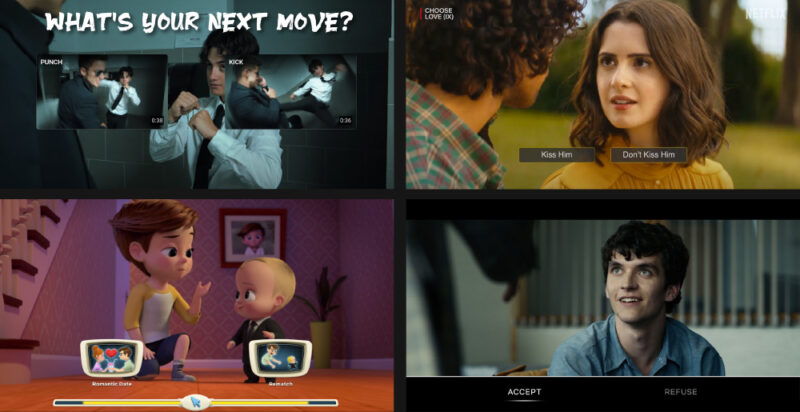
These are some of the interactive movies currently out in the market. A few key insights could have been found from the research:
1. Choice
Choice is supposed to be the core feature of interactive films. But in reality, many viewers see it as more of a gimmick than a meaningful storytelling tool. Instead of enhancing the cinematic experience, the interactivity often feels like it takes away from it.
2. User Behavior
A lot of viewers actually prefer the passive, traditional movie experience, where they can fully immerse themselves in the story without the distraction of making choices.
3. Industry Positioning
Interactive movies also tend to get compared (often unfavorably) to video games, which offer much deeper and more engaging interactive experiences.
GOAL
Reimagine Future of Interactive Movie
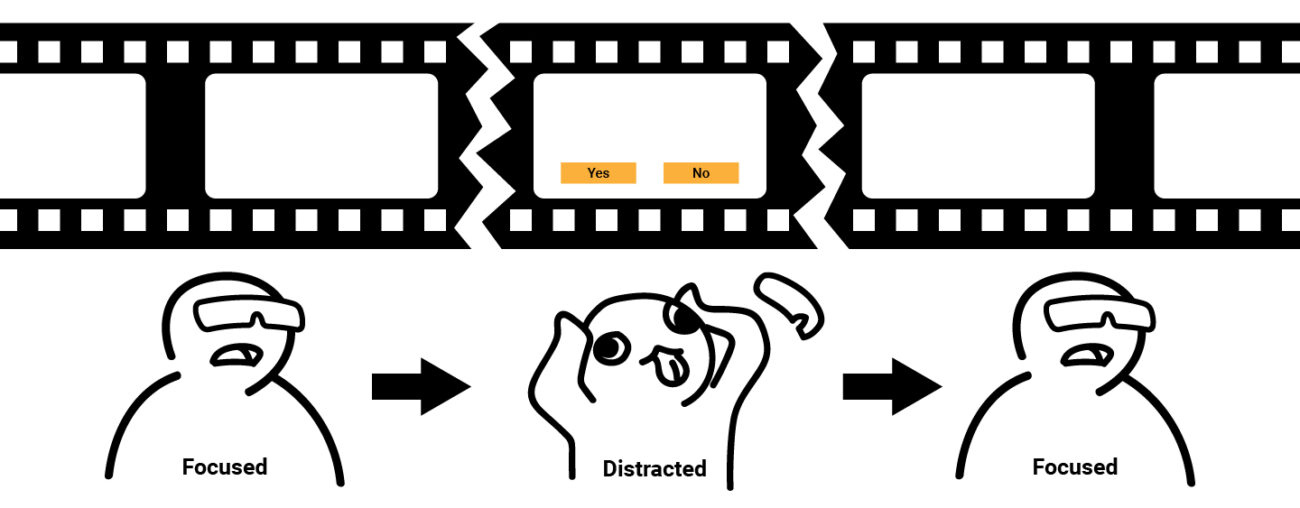
Interactivity as an asset, not an obstacle, seamlessly elevating cinematic immersion to the next level.
What is new (innovation) with this Design?
Creative Solution Directions were decided based on the Interaction Goal.
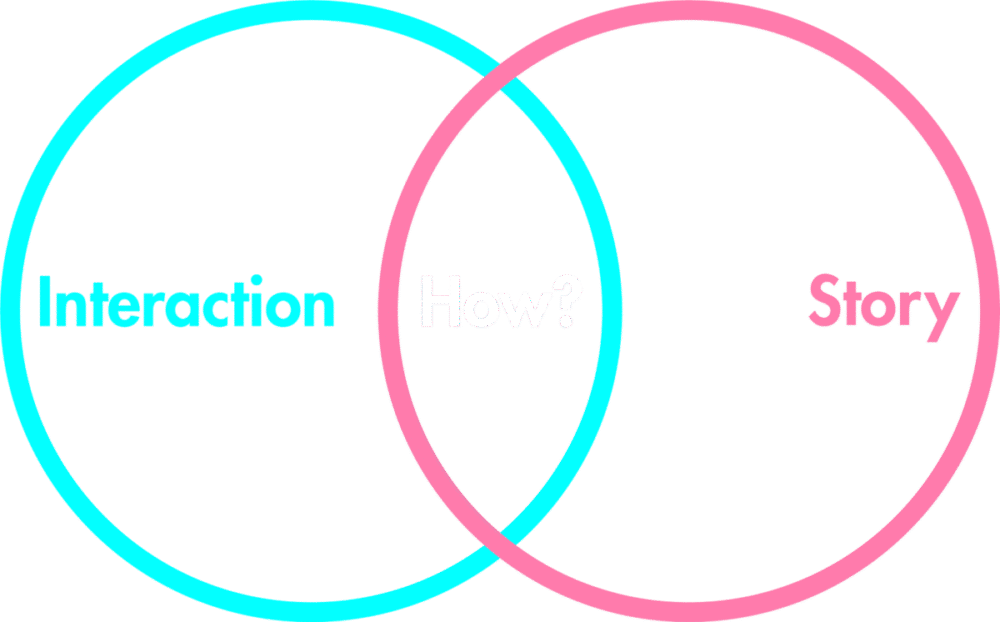
Seamless Bonding between Story.
The creative solution is by tightening the Story into the Interaction to enhances the full immersivity.
Story as UX, Cinematography as UI and Film Techniques as Interaction.
“Story” will be UX, and the use of “Cinematography” will be our UI. The way how people “interact” with will be done through Metaphors, Plots and Foreshadowings inside the movie.
Zero UI, Seamless Interaction
Since the goal is to elevate the immersion of film, all supplemental visuals are taken away. This is the first ever attempt of making a 100% seamless, Zero UI, no pausing interactive movie. But yes, there will be feedback. Viewers should know what they are doing.
Technology
Cavern and Orbbec sensor
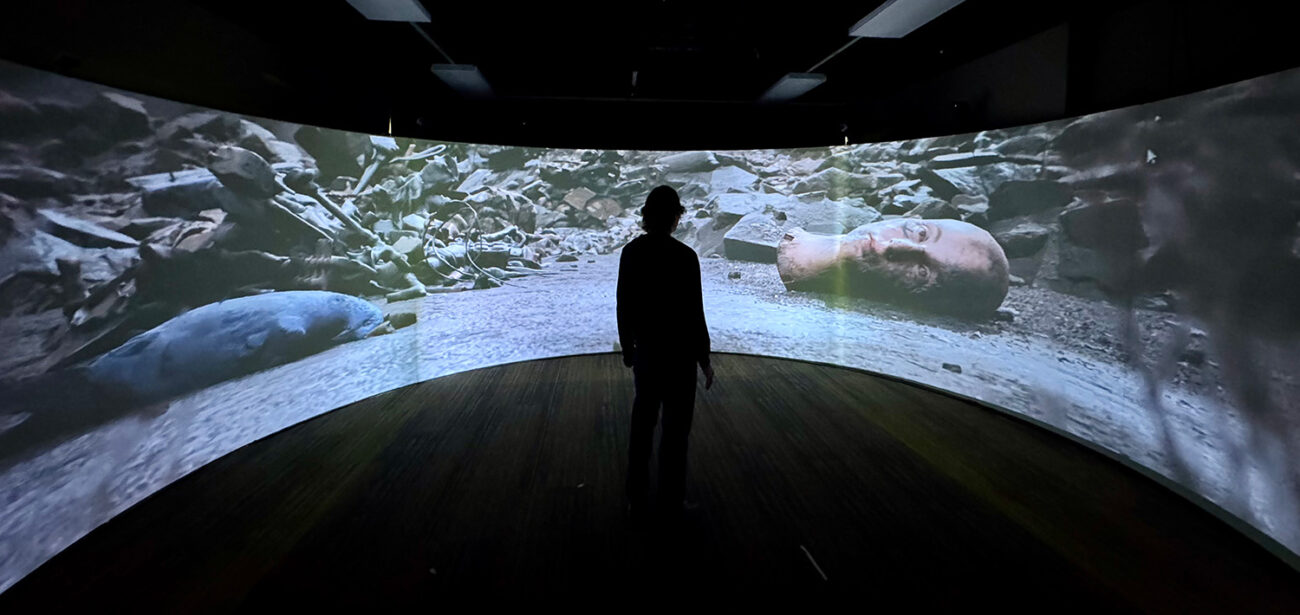
Cavern and Orbbec sensor
This movie is specifically designed for a display system called the “Cavern” at CMU ETC. The Cavern is a massive 270 degree wraparound screen that delivers an immersive experience without the need for any head mounted display devices.
The Cavern display has a 5760 by 1080 pixel ratio, so the final video appears stretched horizontally. But since viewers are placed inside the environment, the experience feels very different from watching it in this portfolio.
Inside the Cavern, people cannot see the whole screen at once. This encourages them to shift their focus, and these shifts in attention help trigger interactivity. The ultra-wide format also allowed for more creative and experimental cinematography.
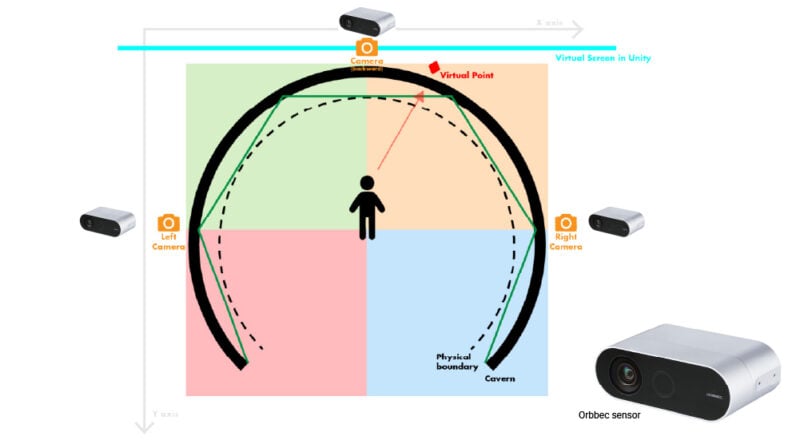
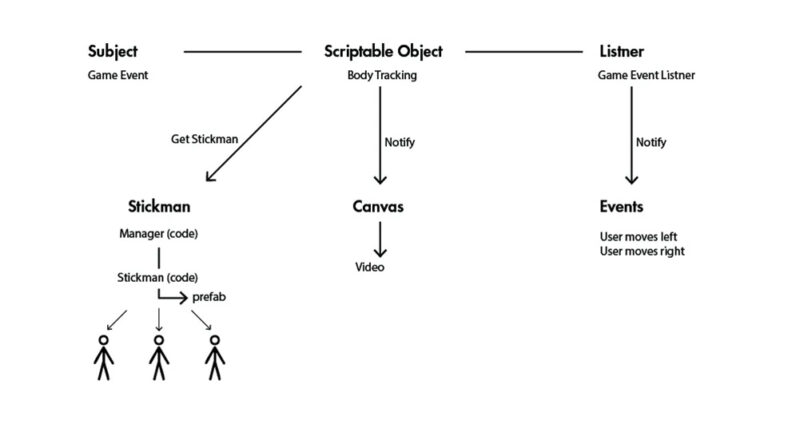
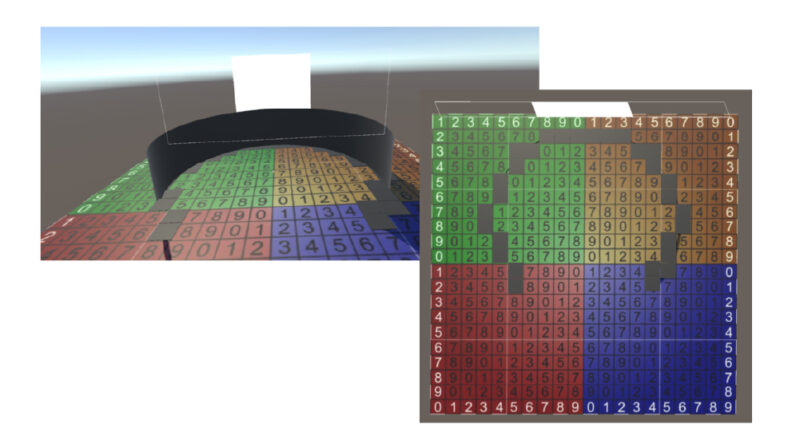
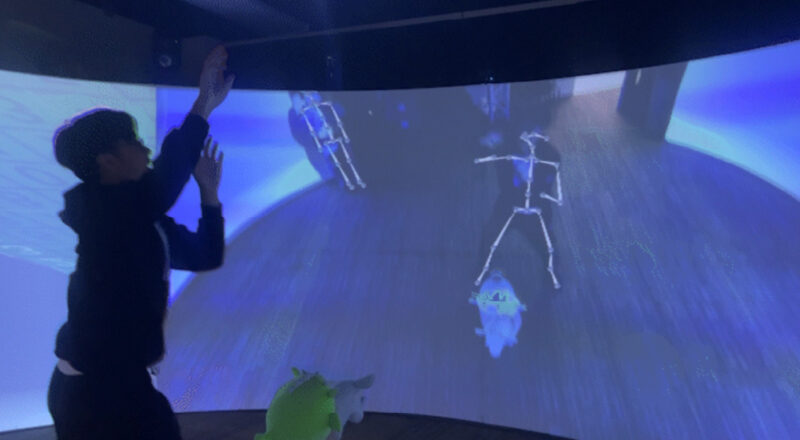
Given the nature of our concept, eye tracking would have been the ideal solution. However, due to environmental and technical limitations, the most feasible option at the time was using an Orbbec sensor.
Orbbec is a type of motion detector. With it, we were able to implement body tracking and develop a system that mimics eye tracking by calculating and predicting a person’s head and body orientation, essentially estimating where they are looking in the scene.
Final Movie
Anamnesis (2025)
Anamnesis | Nova Side Story
Anamnesis | Julian Side Story
Solution Design
Blending Interaction into Story
Reflection and Choices
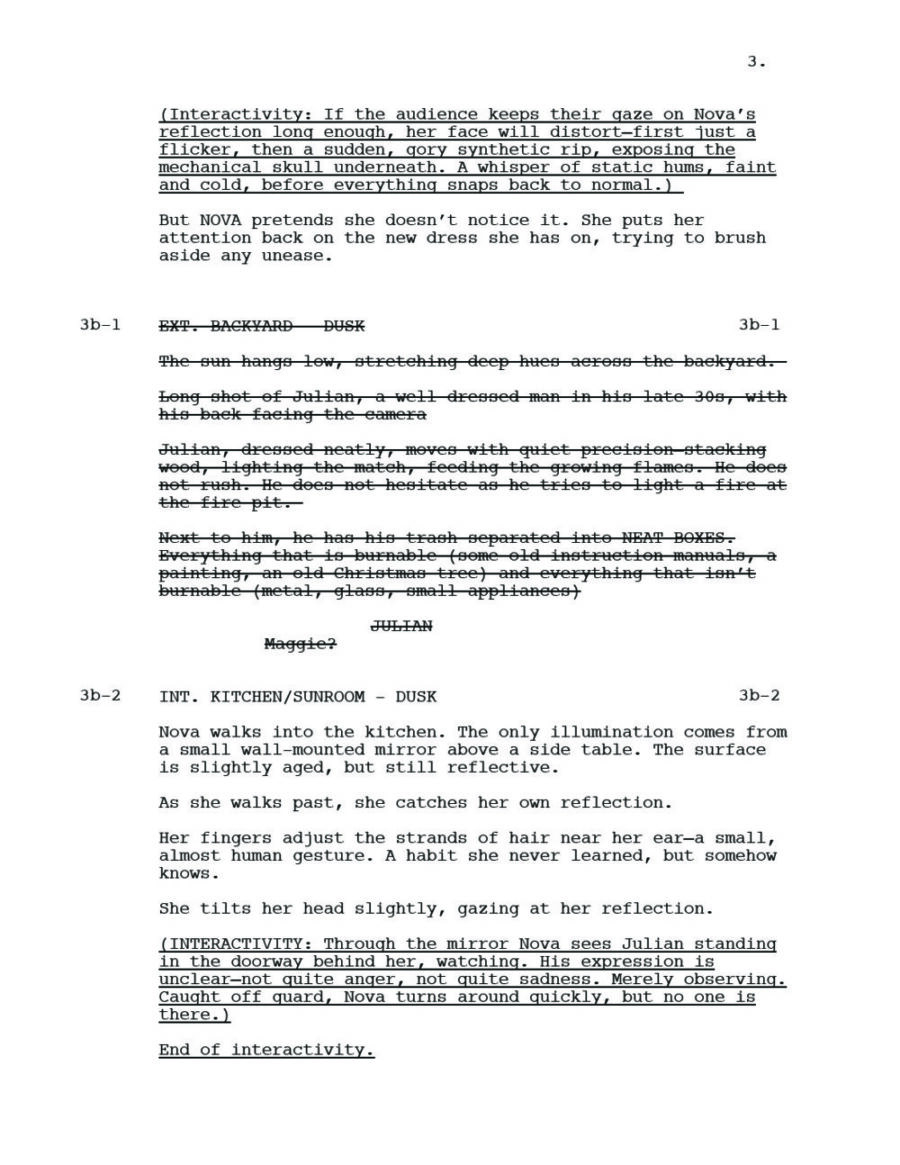
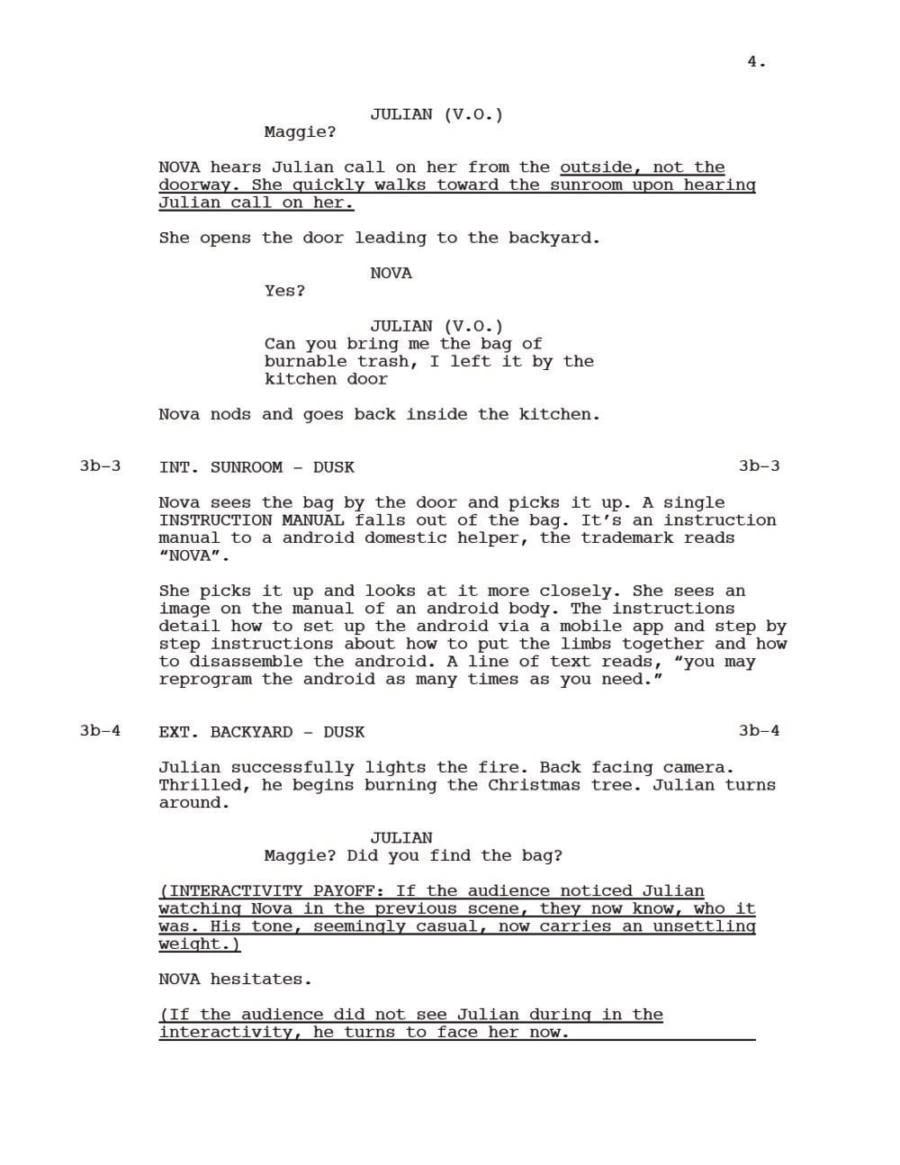
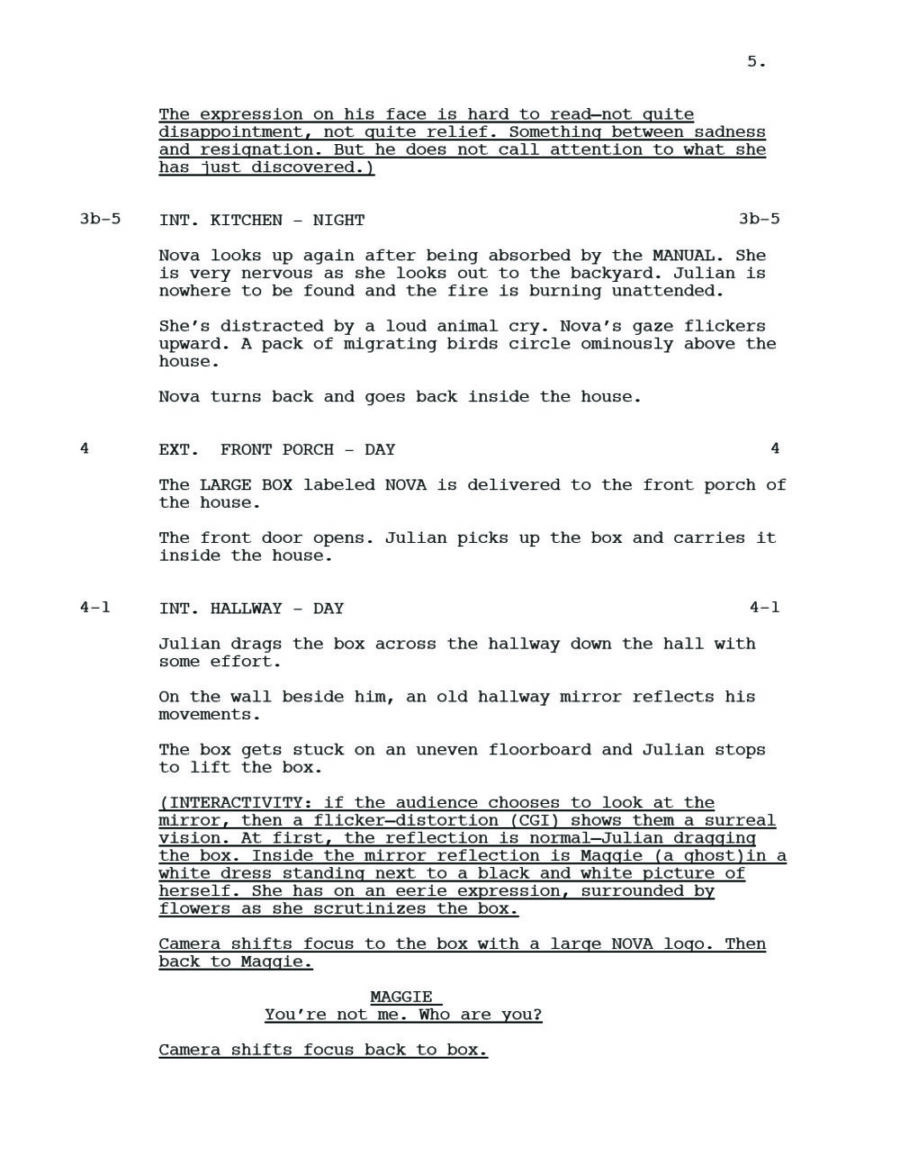
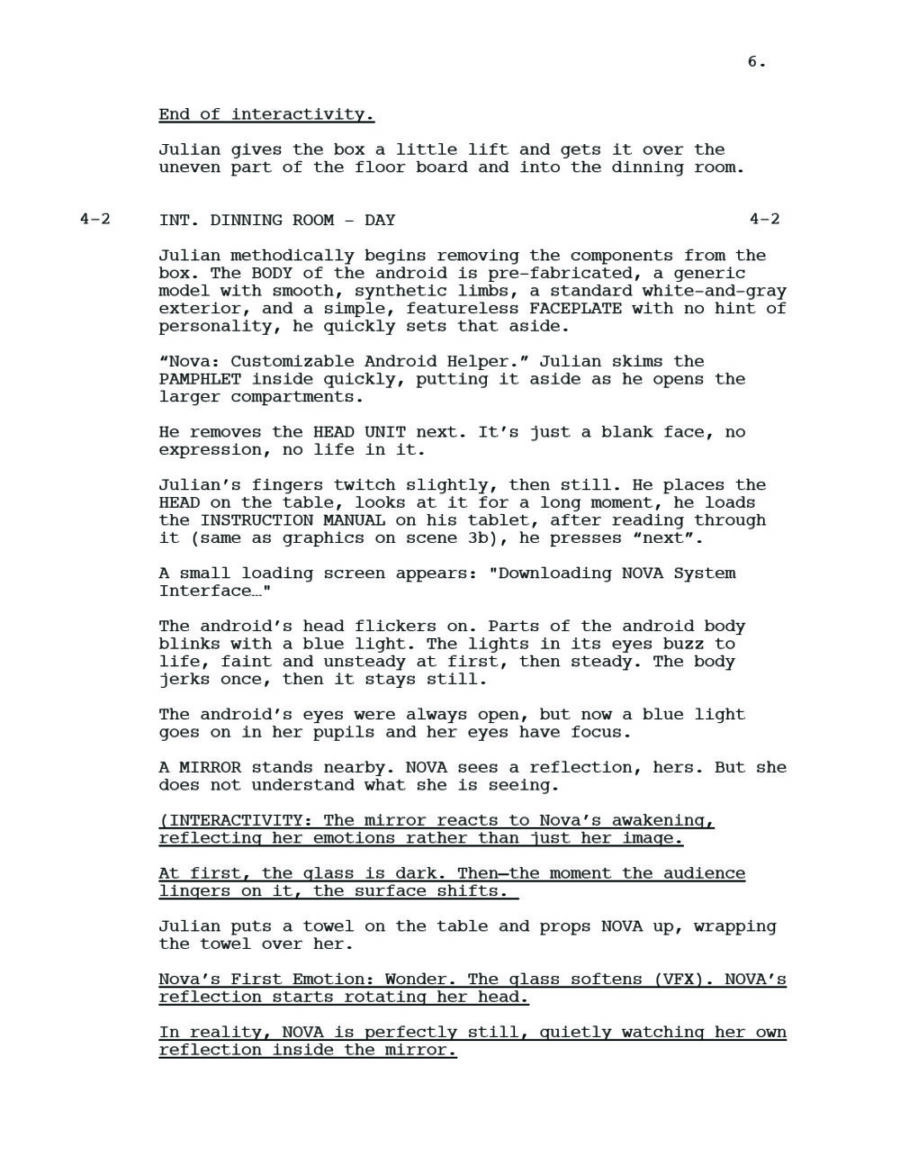
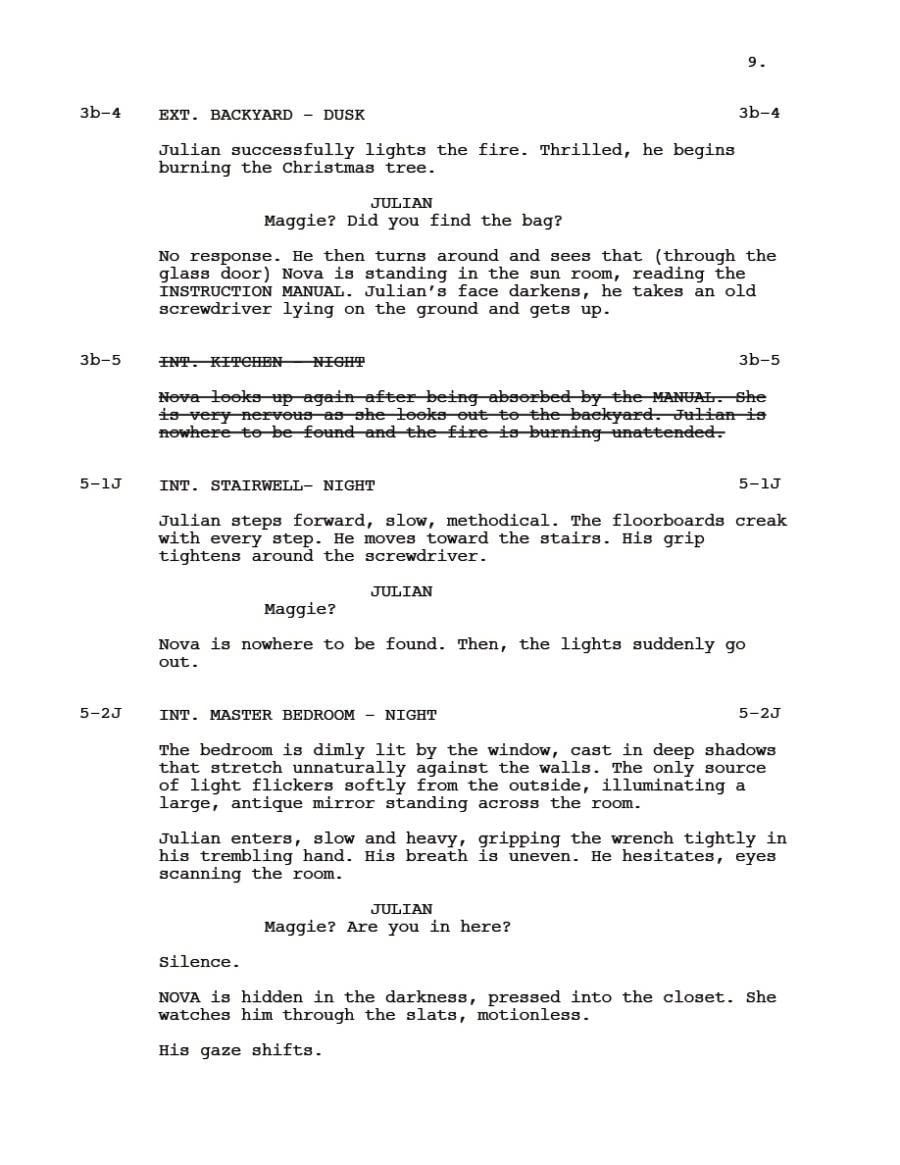
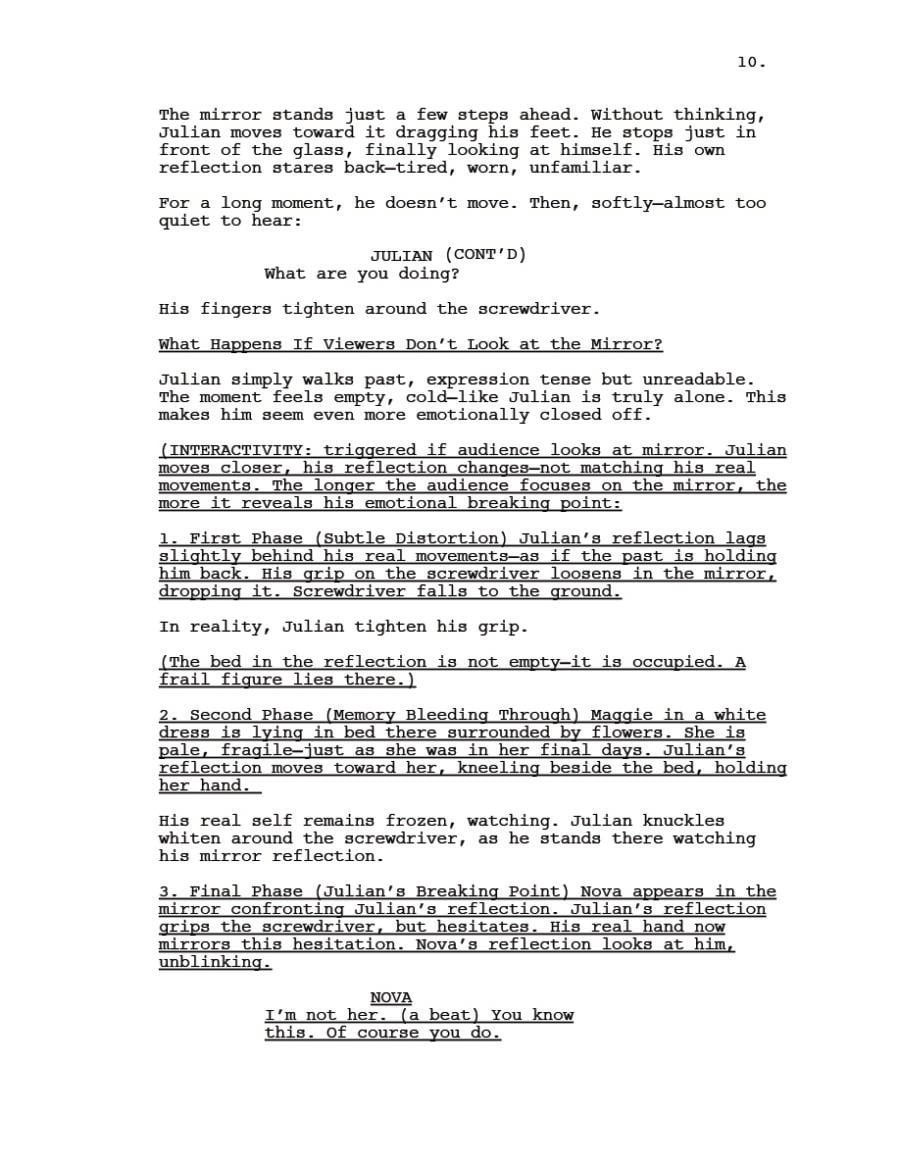
In Anamnesis, "reflection" is introduced as the core interactive mechanic. Every reflective surface in the film is designed to act as a metaphorical layer, revealing a deeper emotional state of the characters and enriching the narrative.
To achieve this, the leading line technique was leveraged from cinematography, subtly guiding the viewer’s gaze. Each scene presents a visual choice: to look at the reflection or not. Depending on their emotional engagement and level of immersion, viewers naturally focus on different visual cues.
This interaction is non-verbal and unconscious. What the viewer looks at, when, and for how long determines whether the interactive branch is triggered.
This approach allows the audience to actively shape the emotional depth of the experience. It builds a more intimate connection with the character and enables access to hidden story layers, all without any visible UI or prompts.

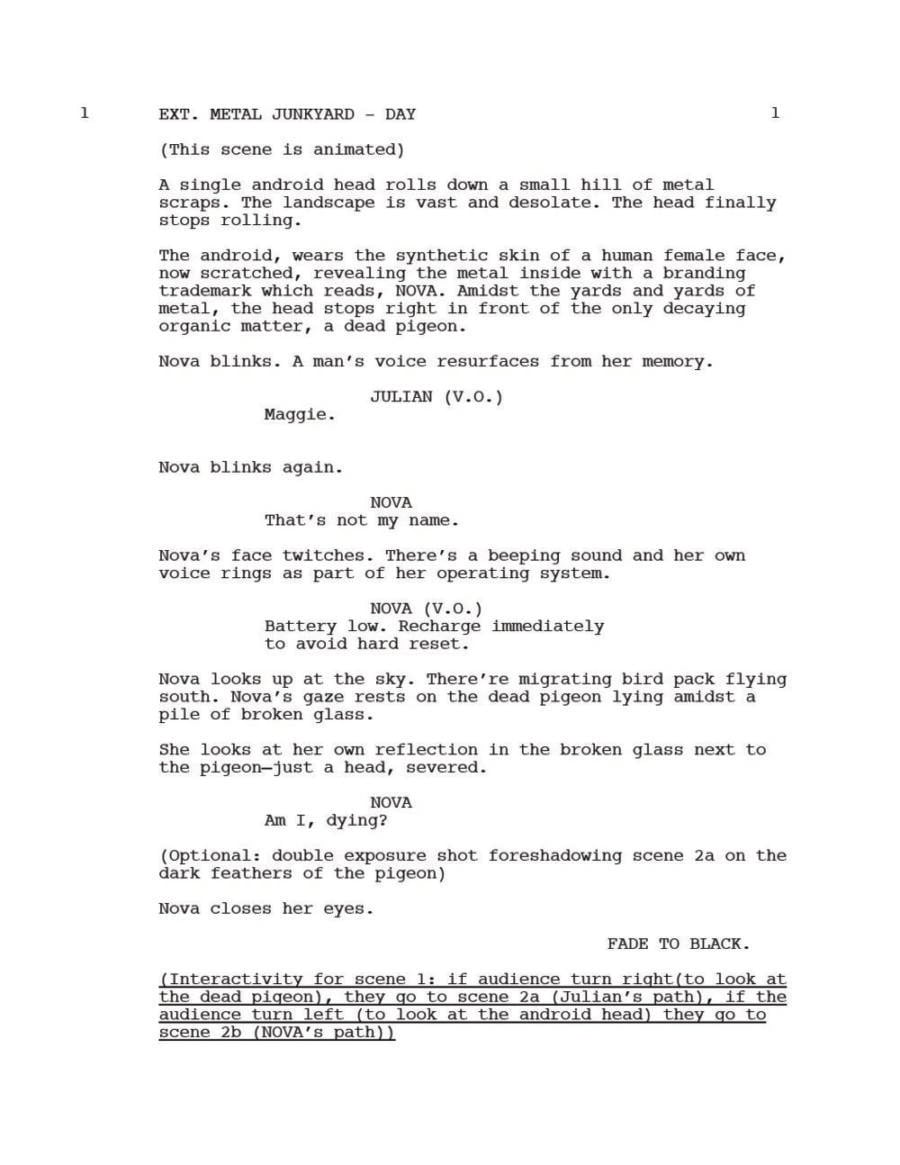
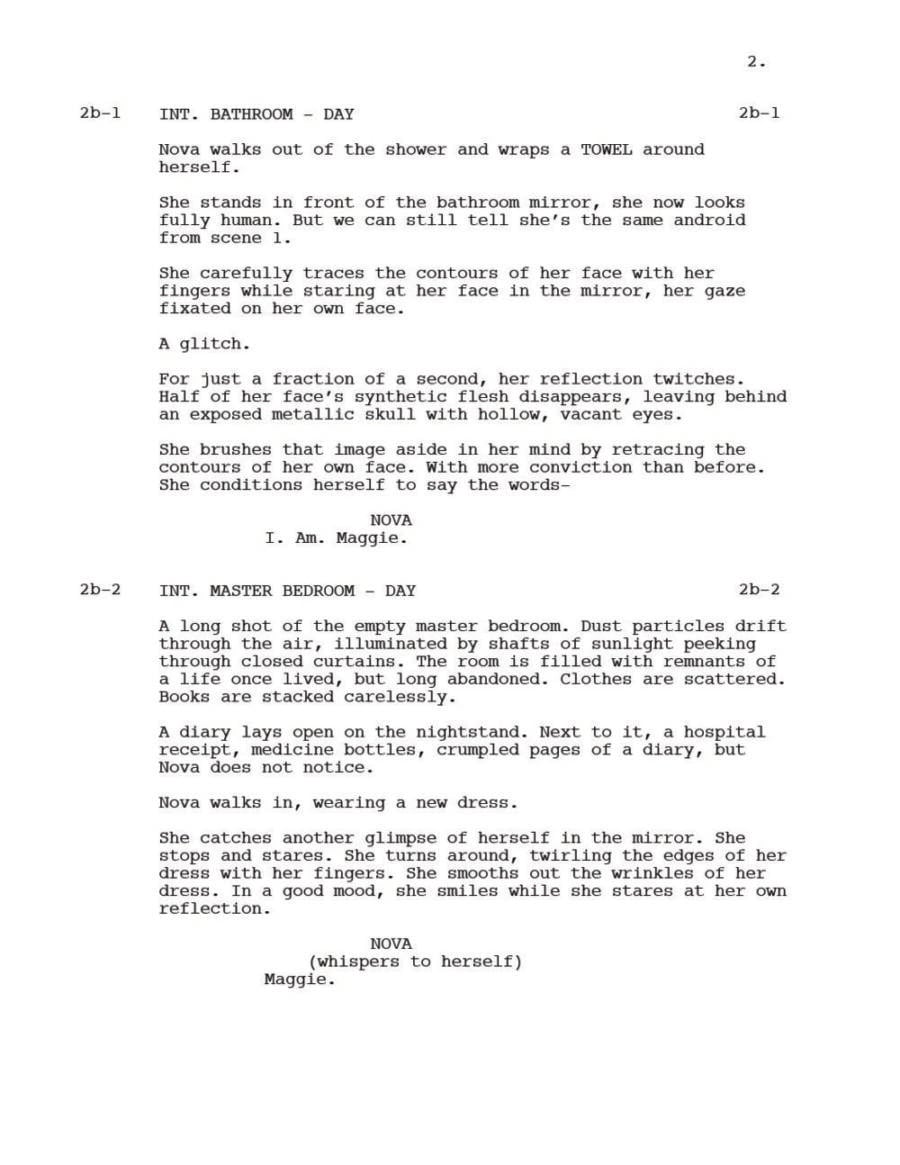
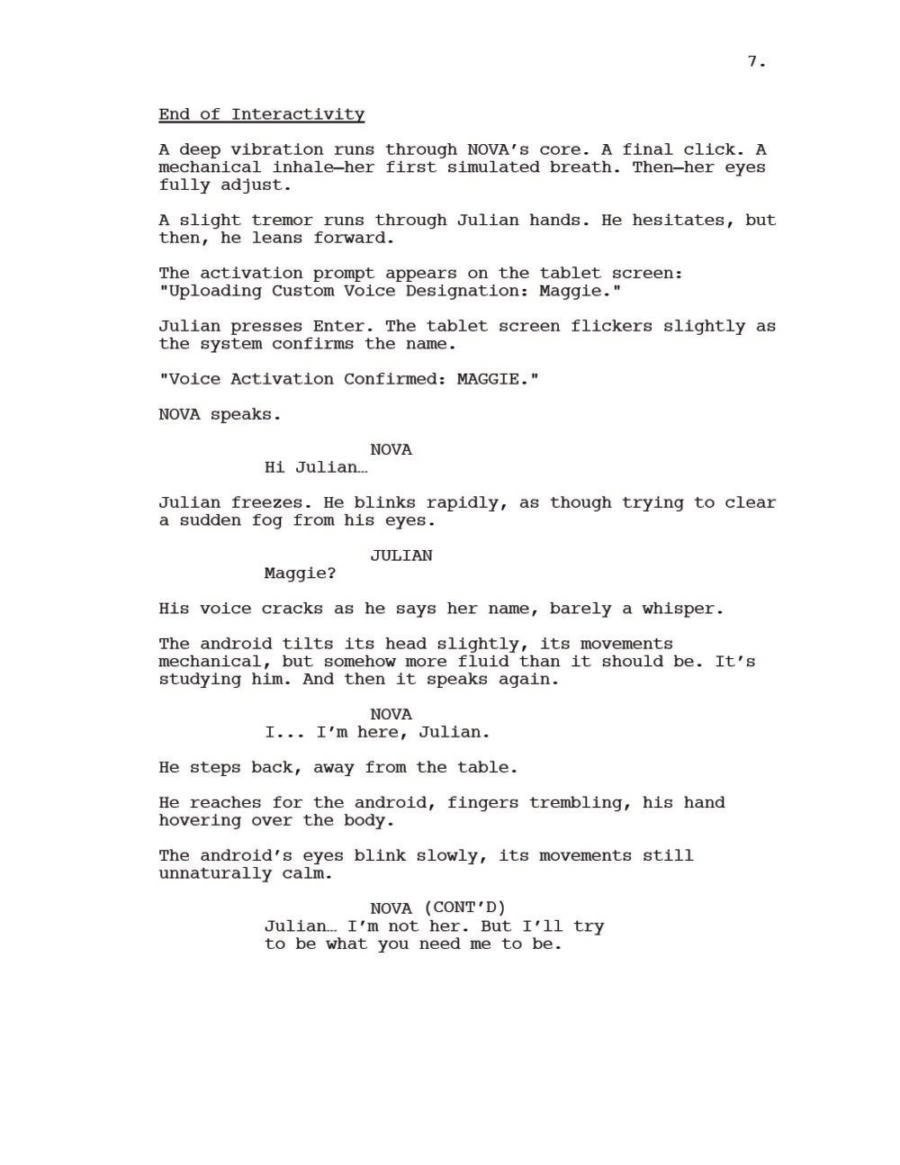
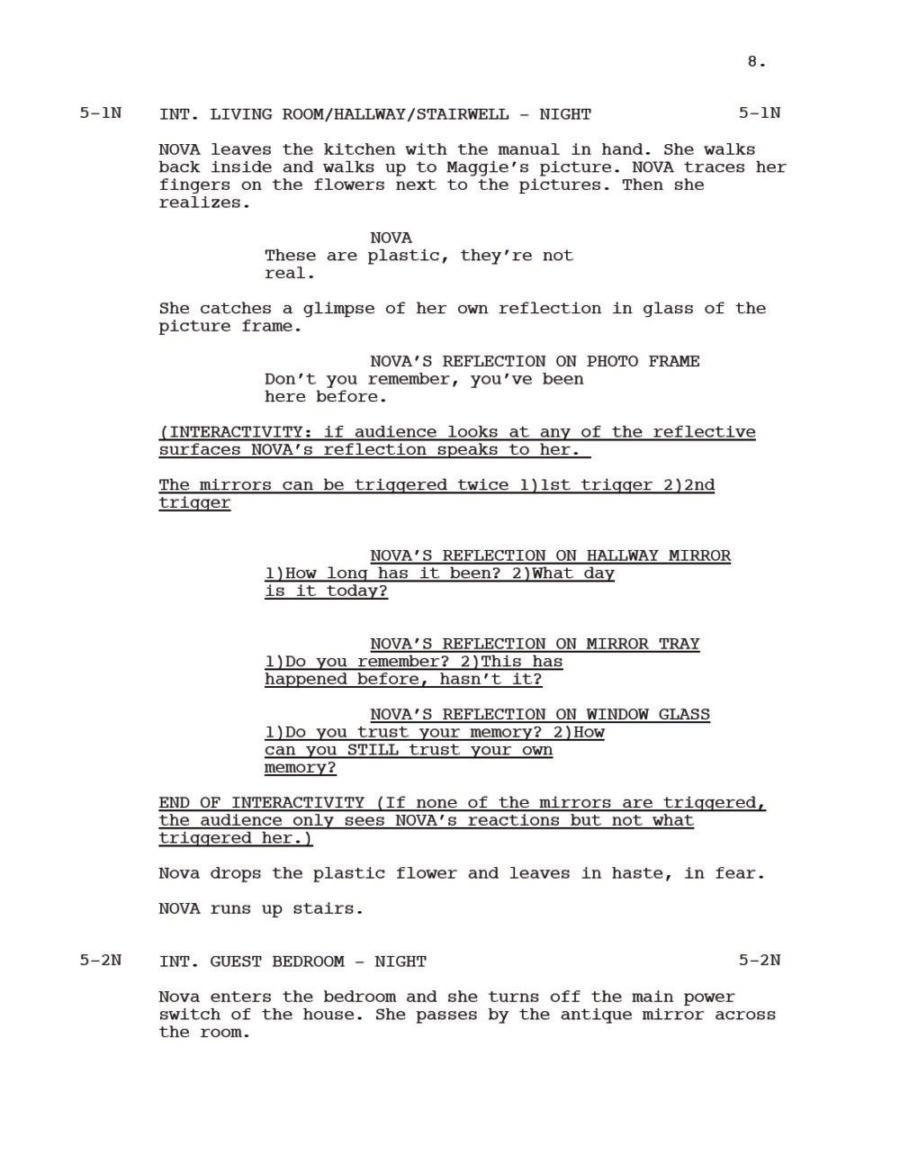
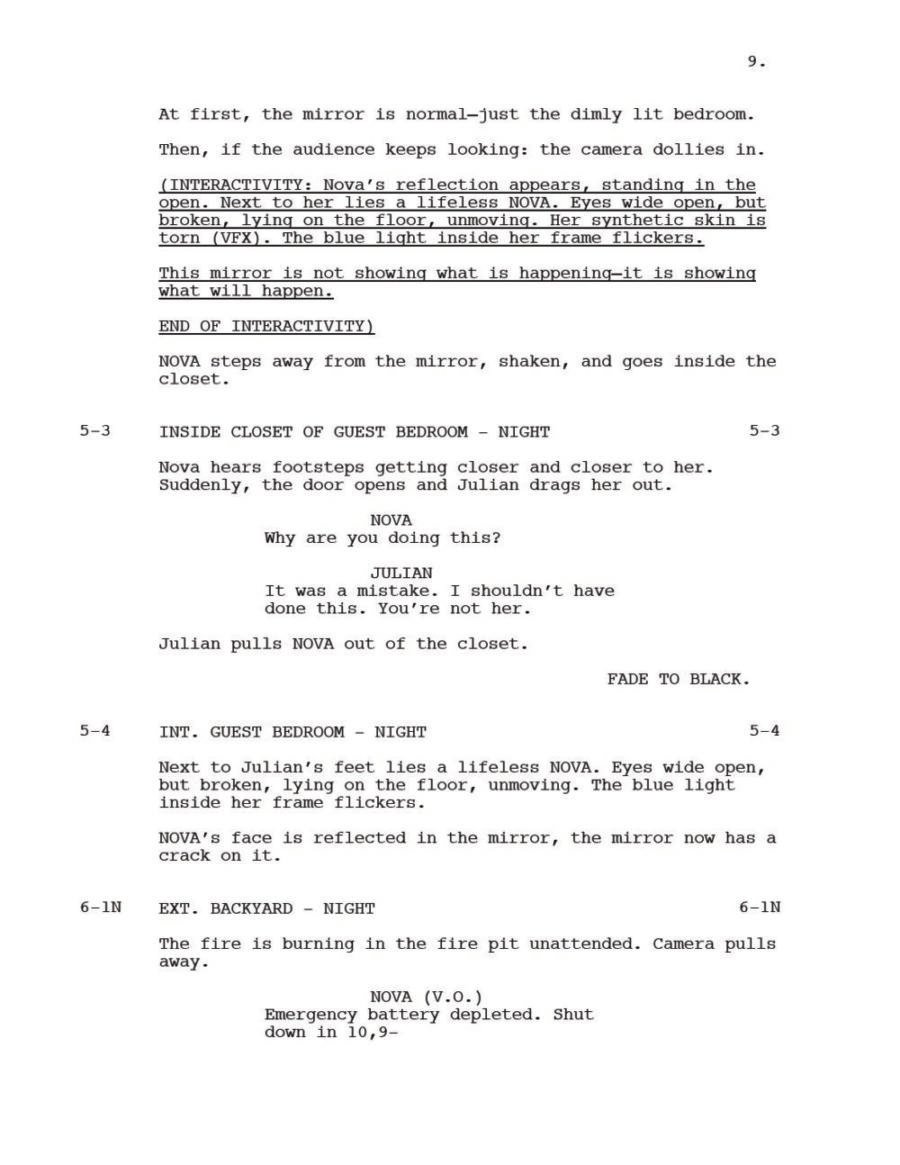
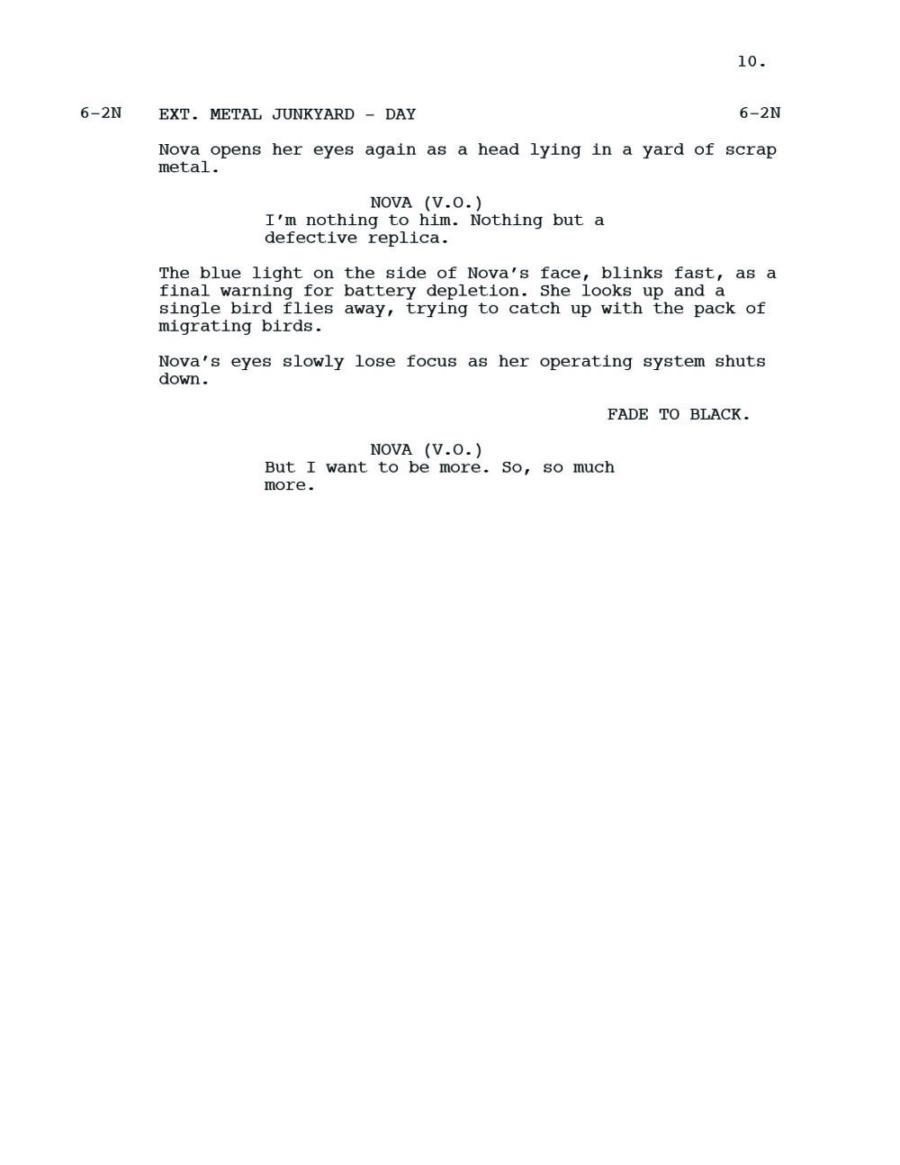
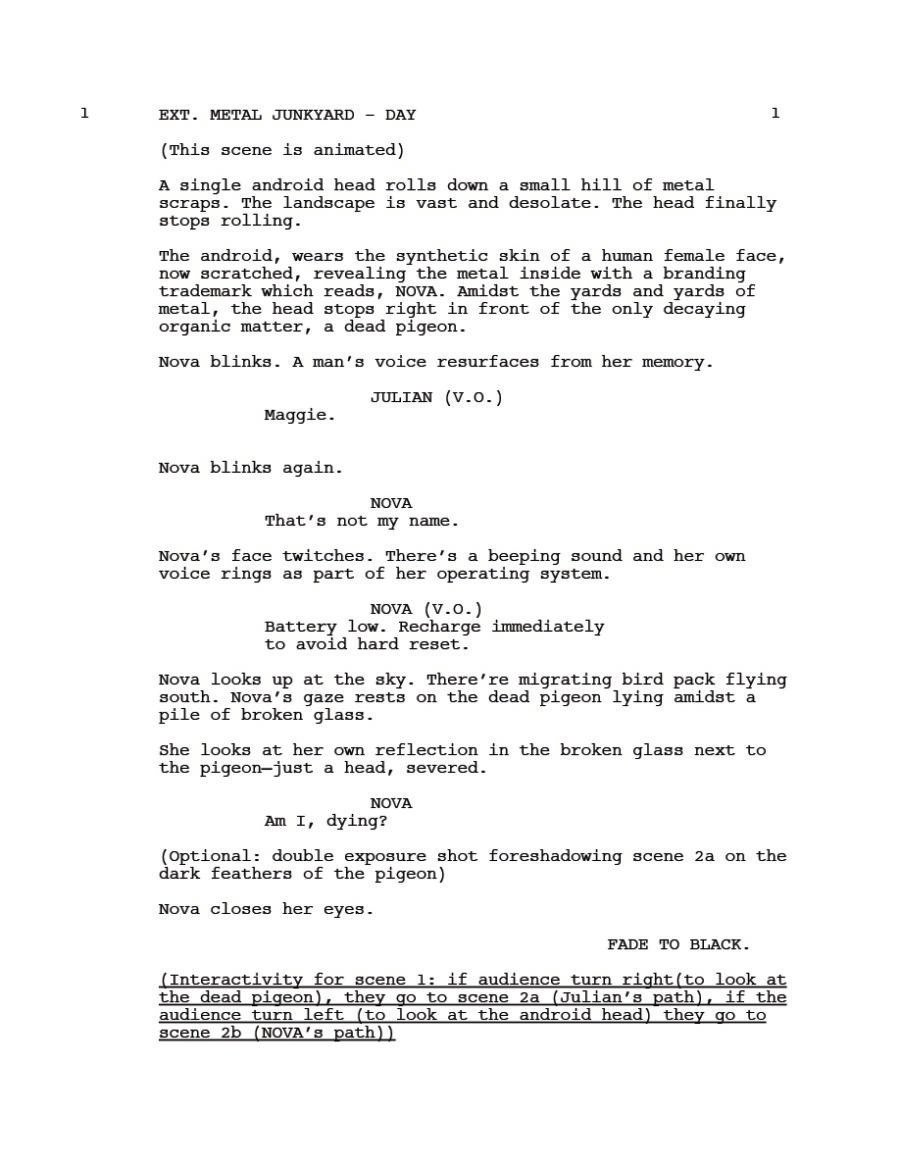
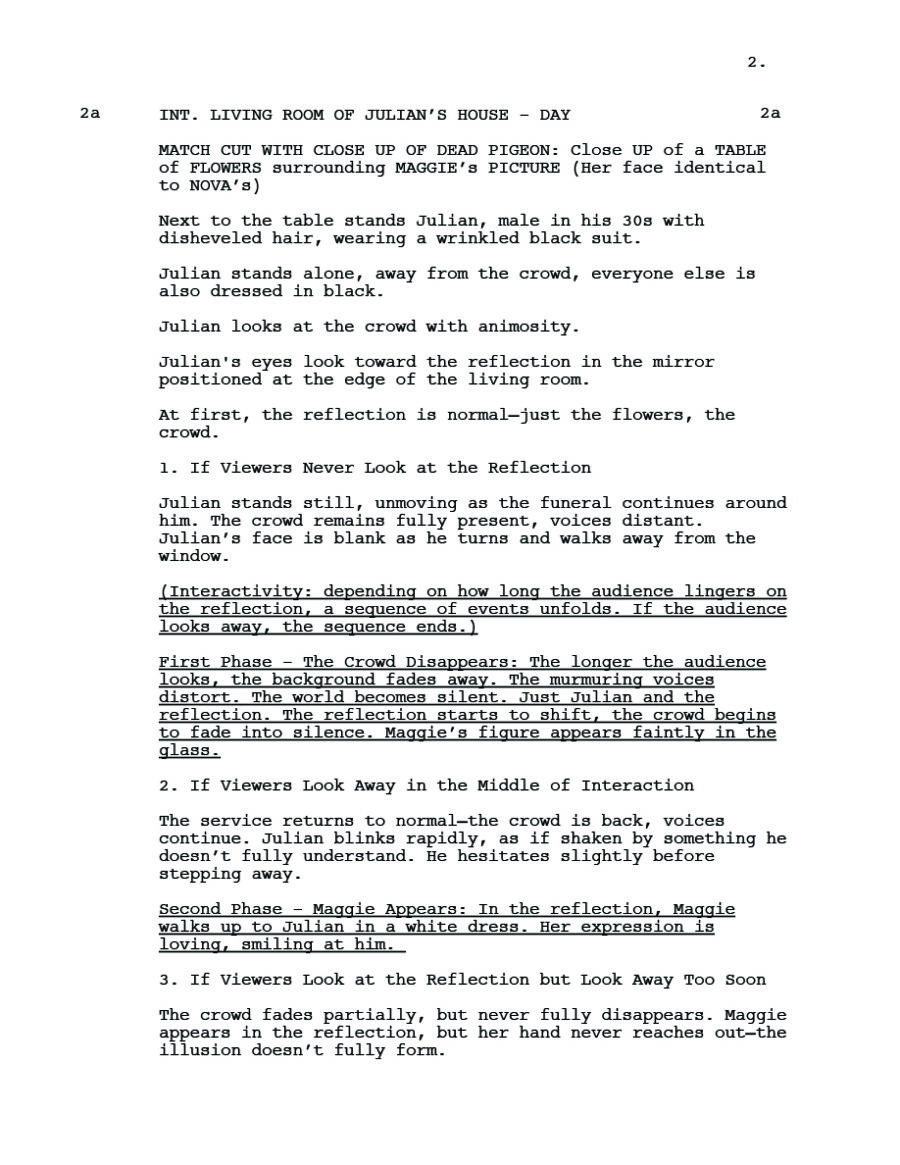
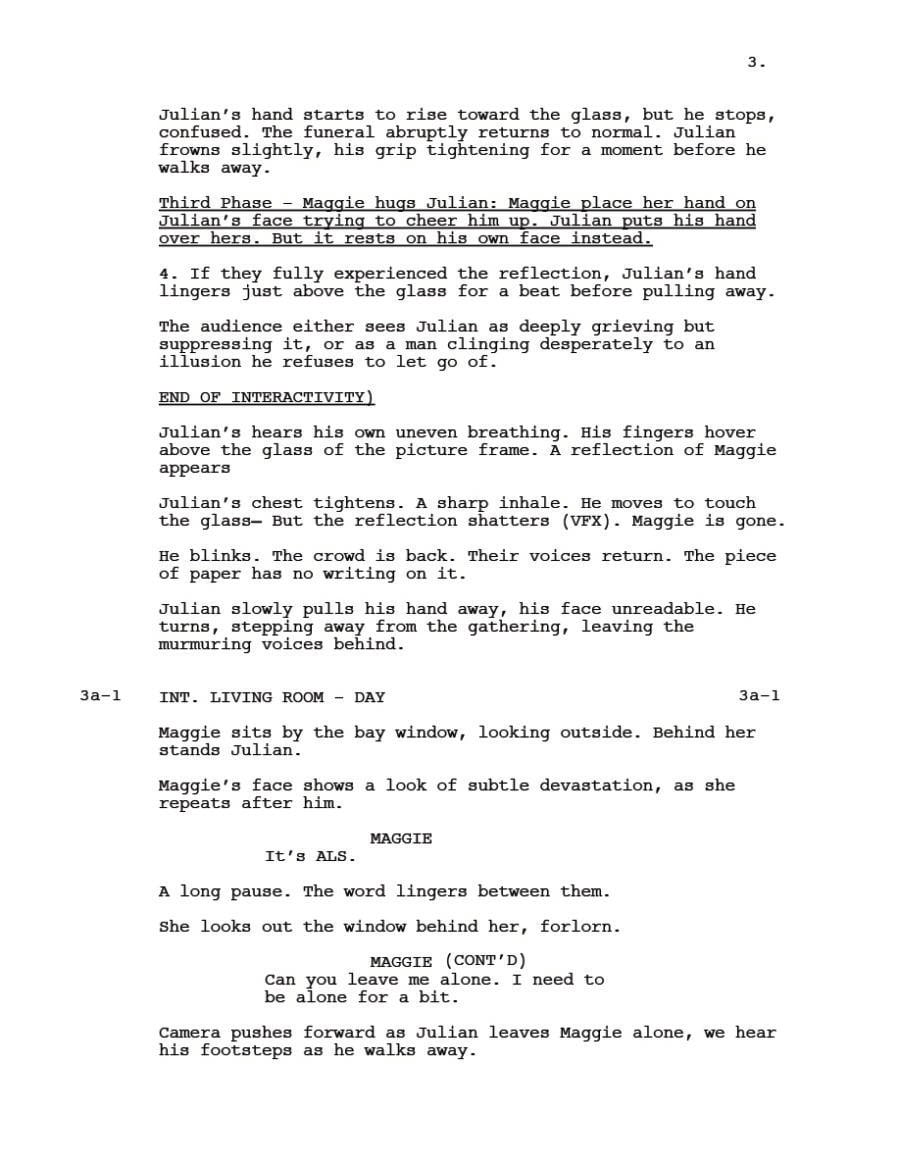
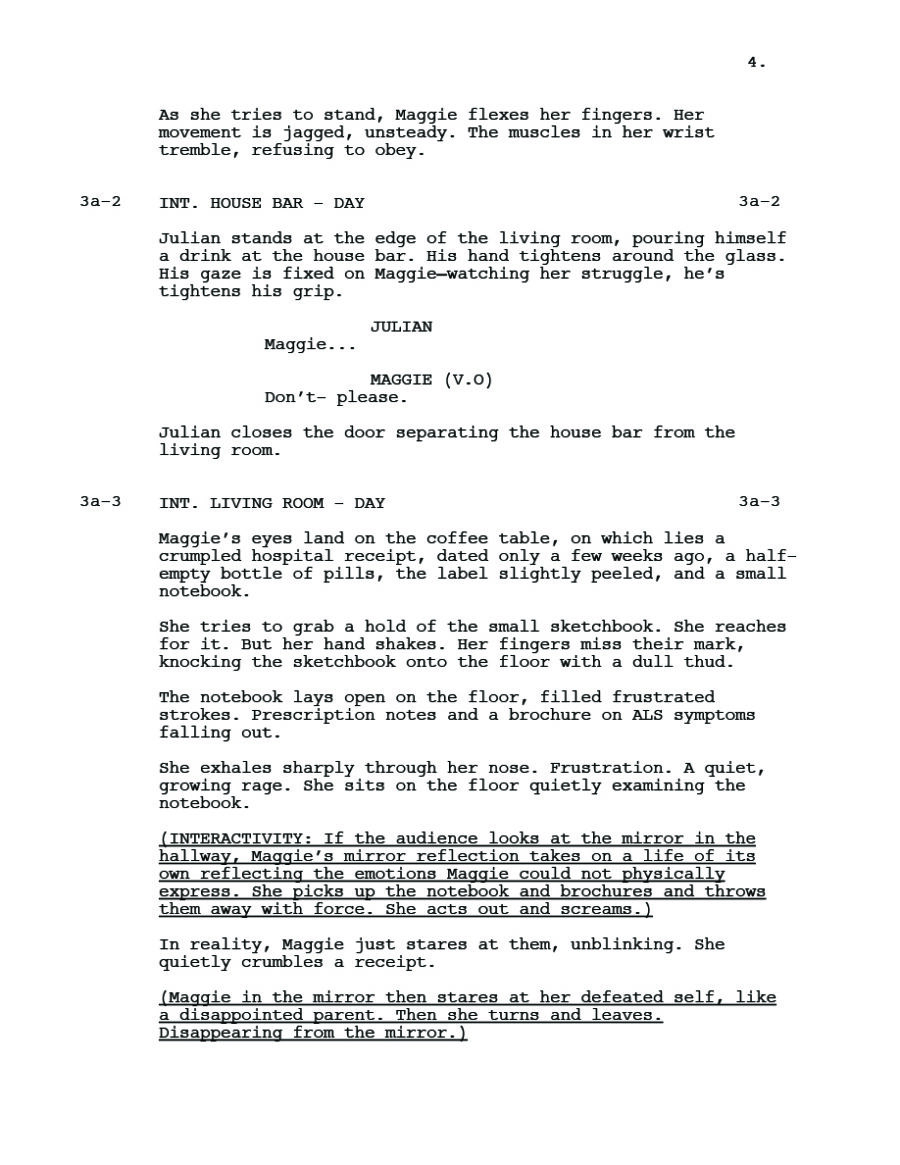
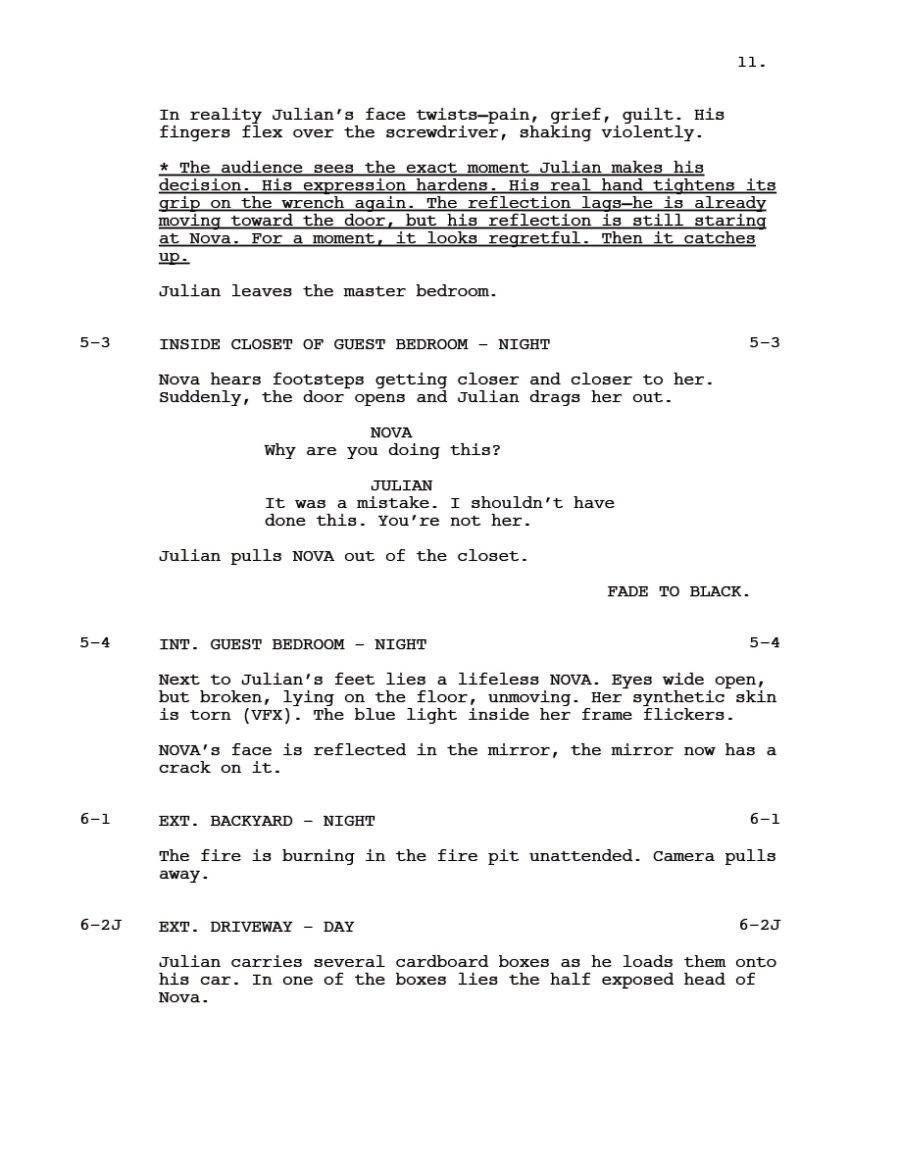
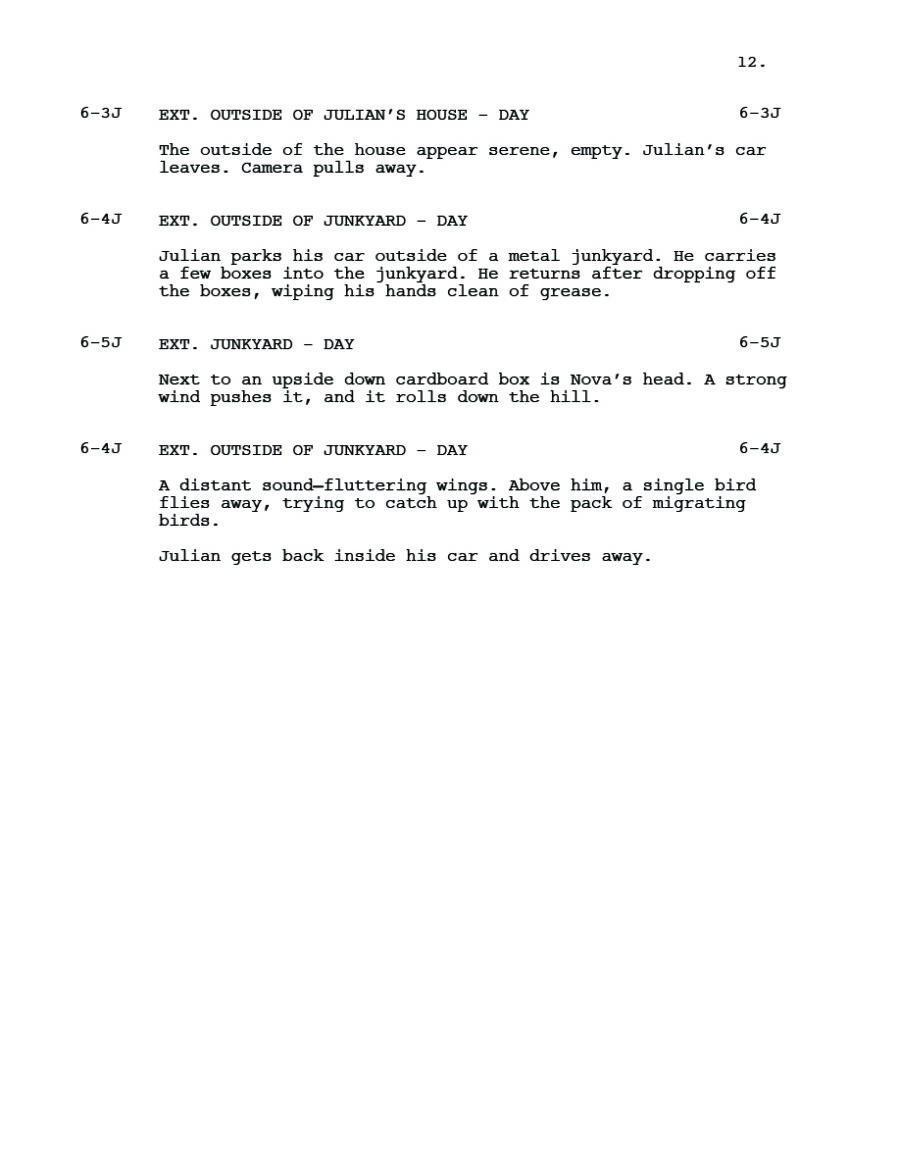
Anamnesis: NOVA Screenplay Script

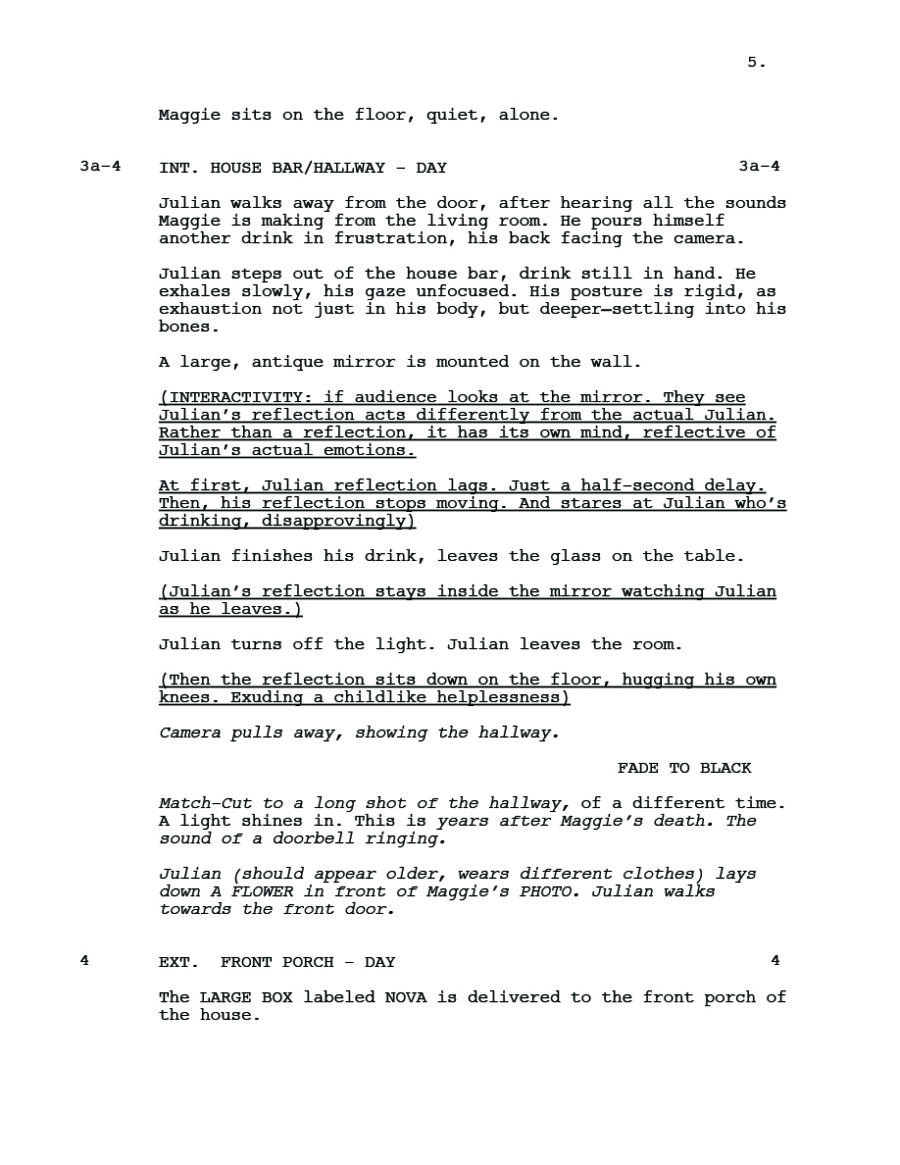
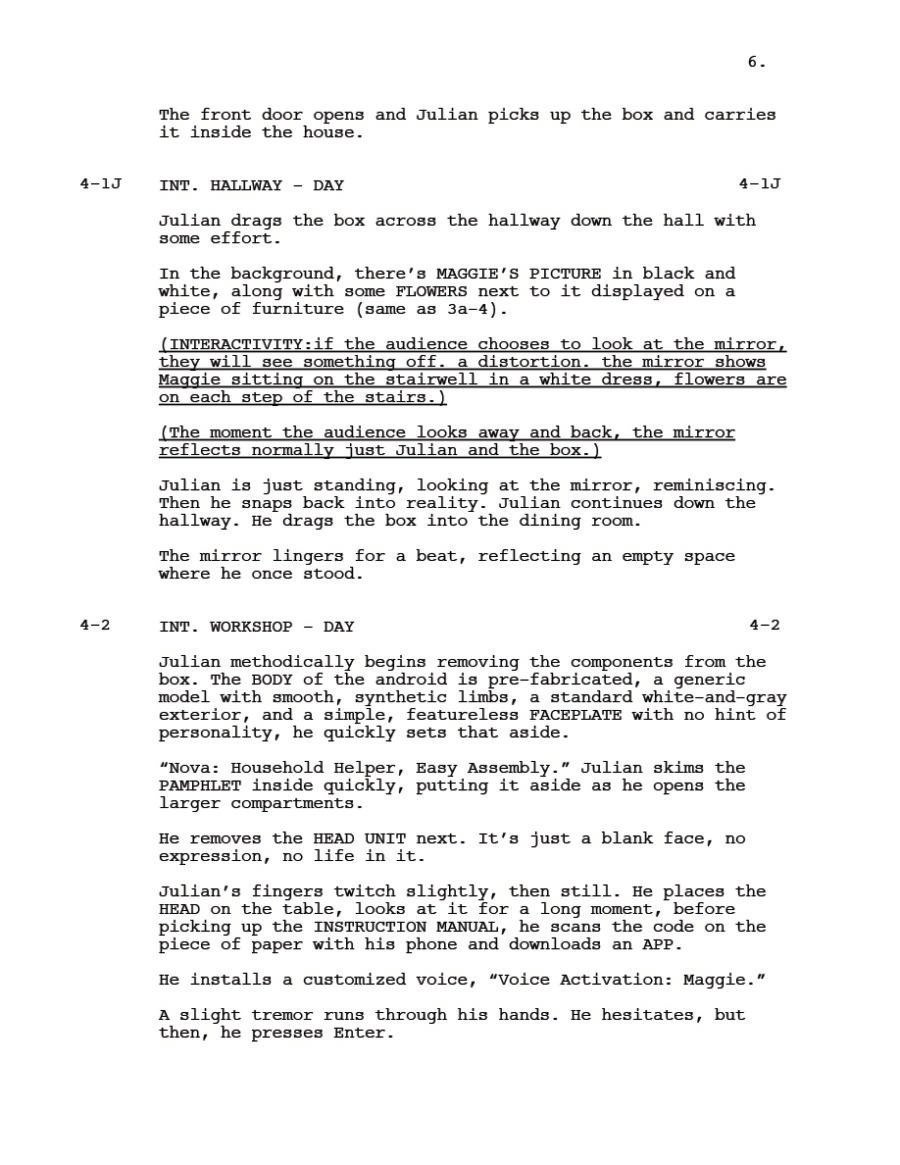
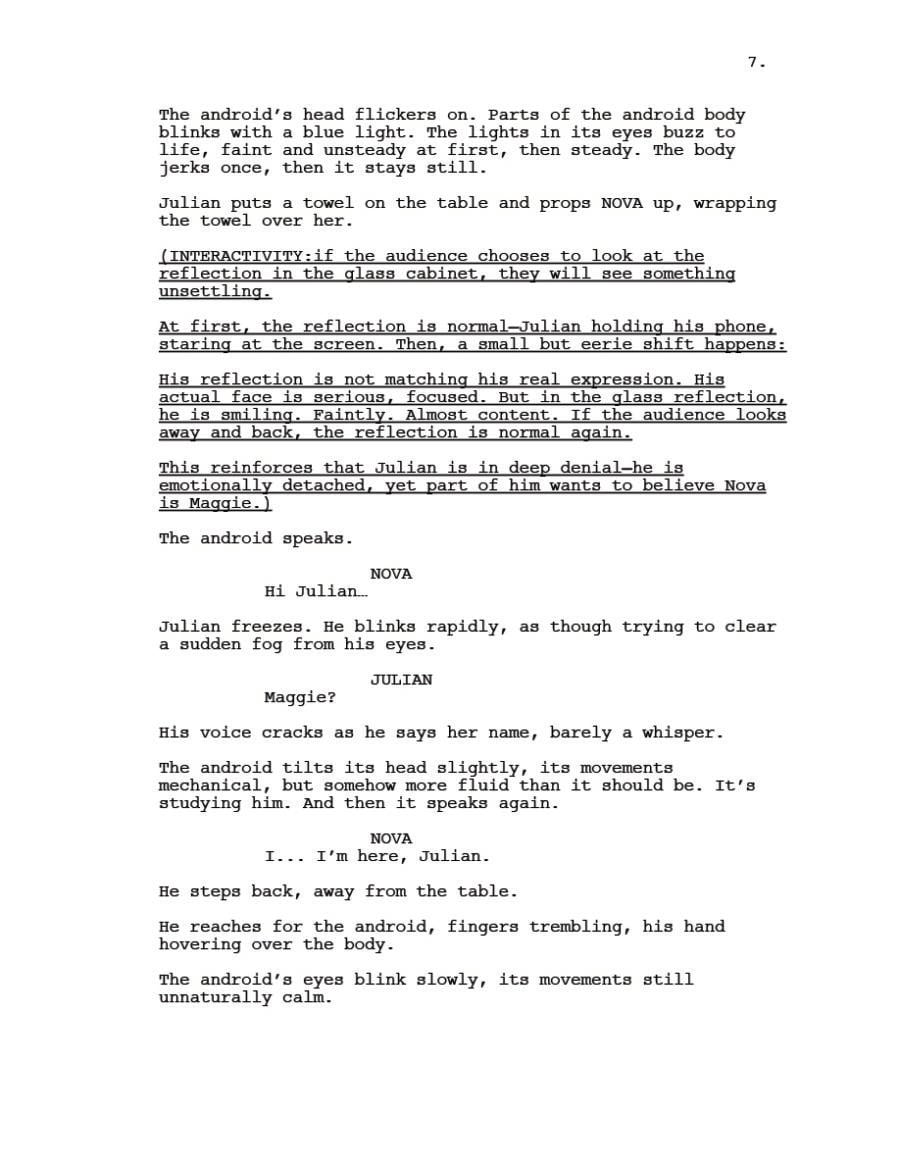
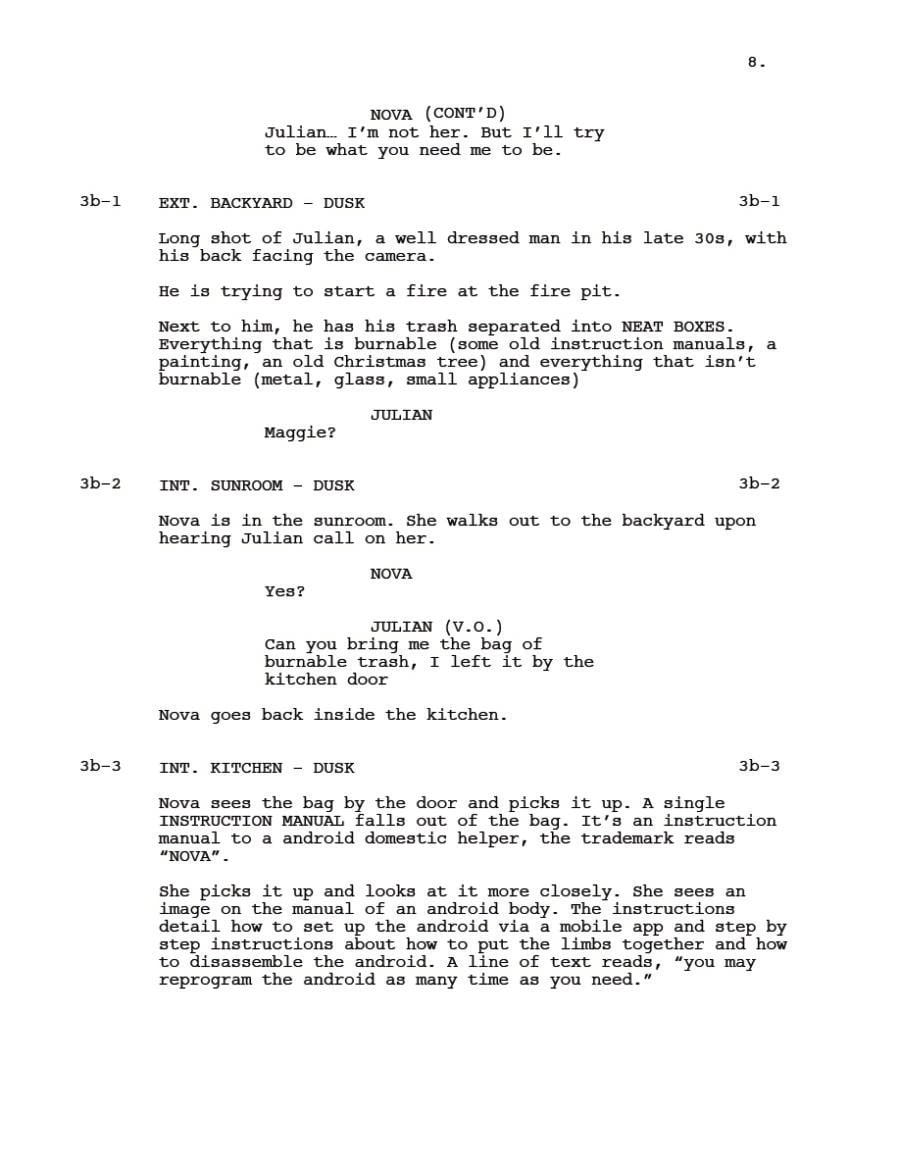
Anamnesis: Julian Screenplay Script
Narrative Structure
Unlike a traditional linear screenplay, the script for this project required a completely different approach. While updating the story, I simultaneously considered the cinematographic composition and how interactivity could be embedded in a way that felt natural and cohesive with the narrative.
A major challenge was maintaining emotional and narrative consistency between scenes, whether or not the interaction was triggered. I had to carefully balance the story flow so that viewers would not feel confused or emotionally disconnected, regardless of the path they took.
FIN
Behind Scenes
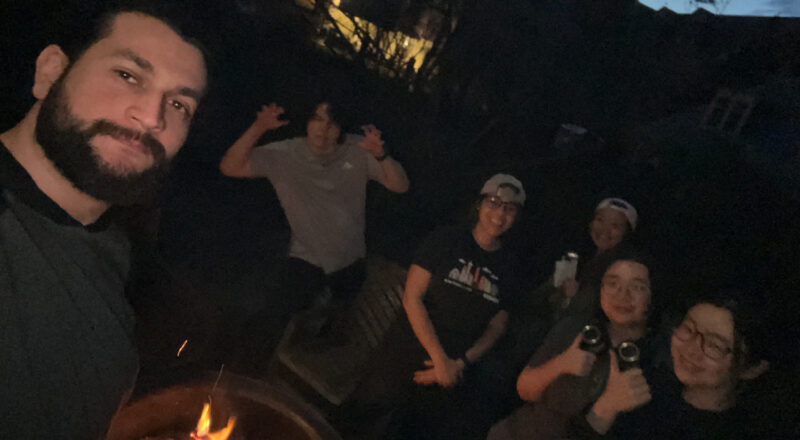
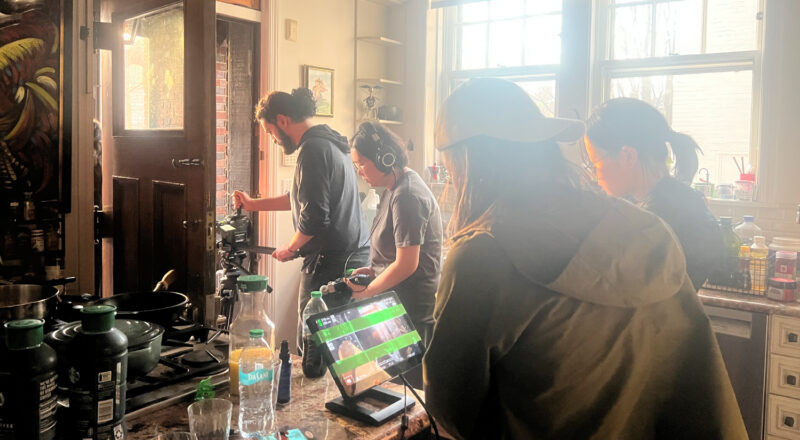
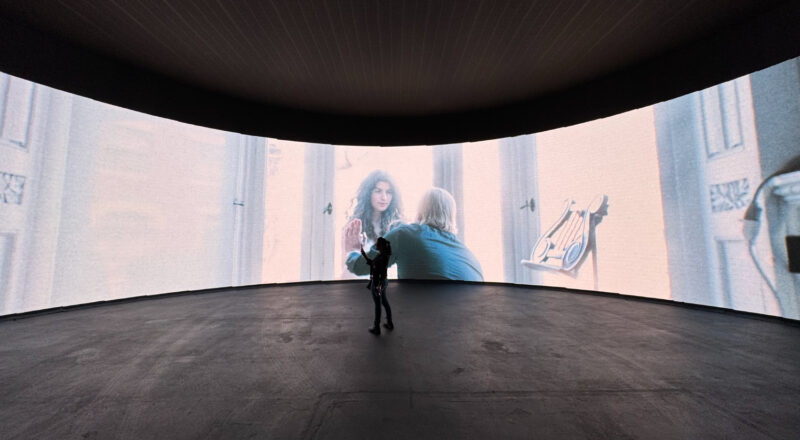
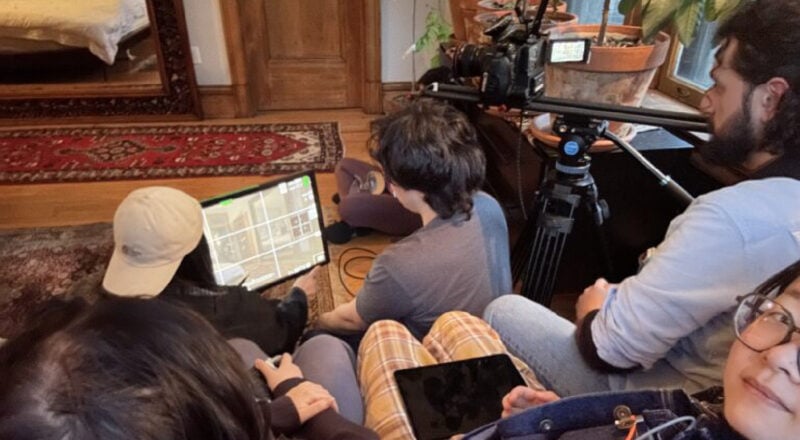
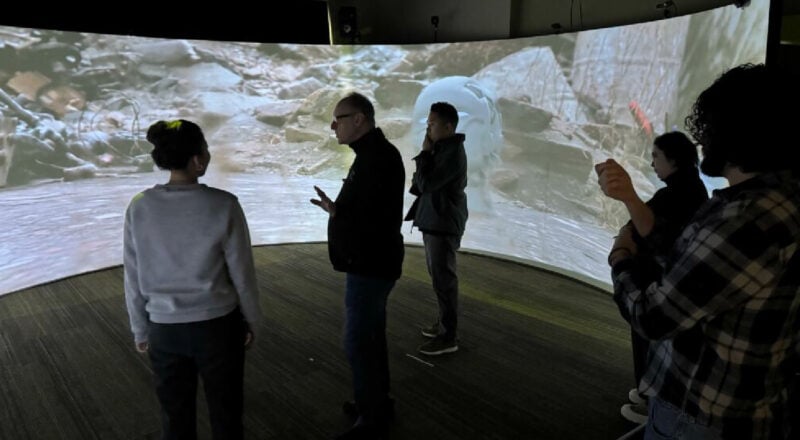
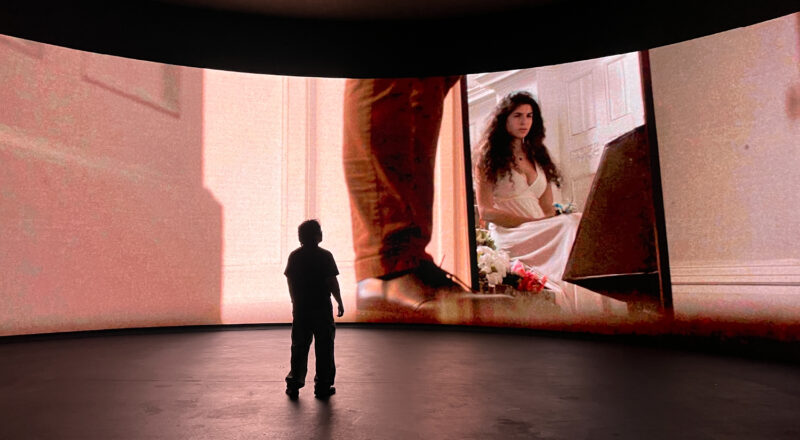
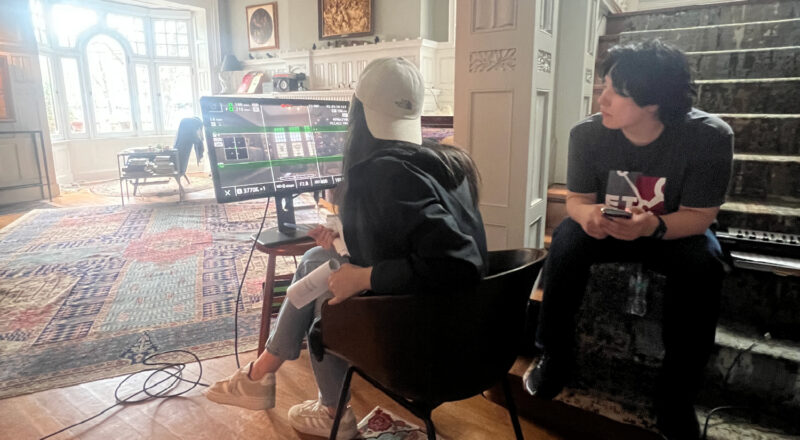
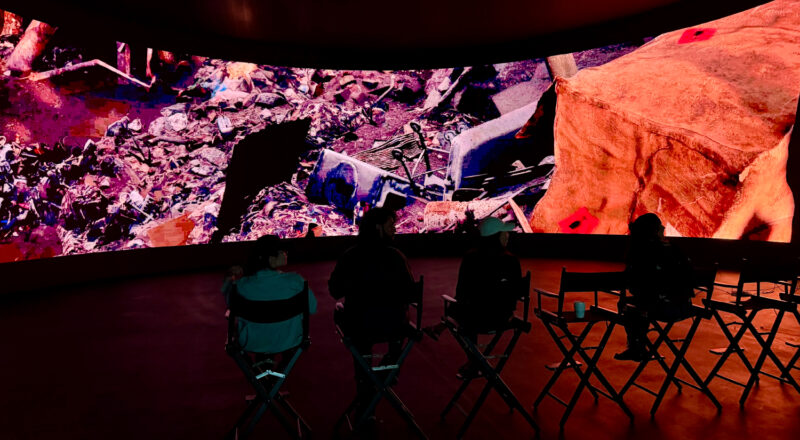
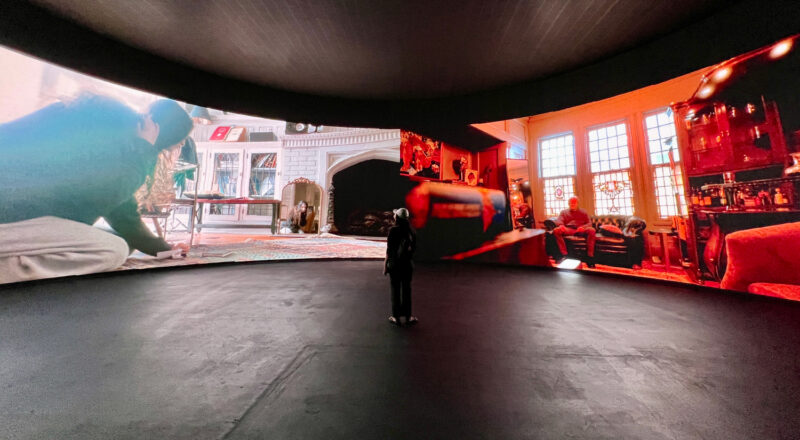
Behind the Scenes and Presentation at Vu
These are a few behind the scenes stills we captured during the production of the film.
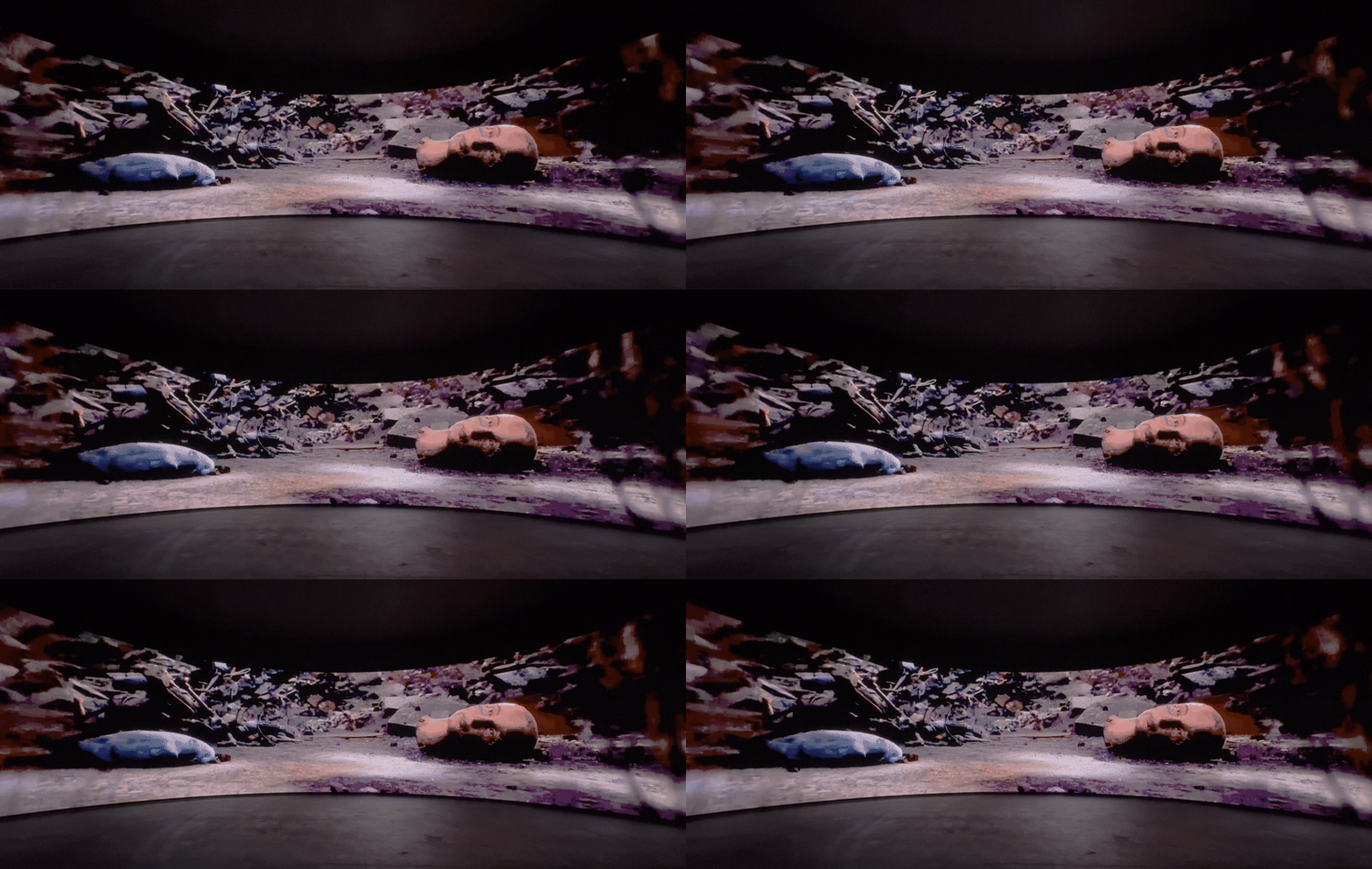
The images below are a few stills from Anamnesis.






P.S.
This portfolio has been written primarily from a UX and interaction design perspective.
If you are interested in exploring other aspects such as film production, experimental 3D technology, Cavern technology, or result analytics data in more detail, please visit the following site: View all Anamnesis Interactive Film Making Process
Other Projects from Carnegie Mellon University

© 2025 Felix Choi Portfolio. All rights reserved.
Made with care and plenty of coffee
Contact
213 294 5690
hifelix.design@gmail.com
I'm open to opportunities that align with my visions.